


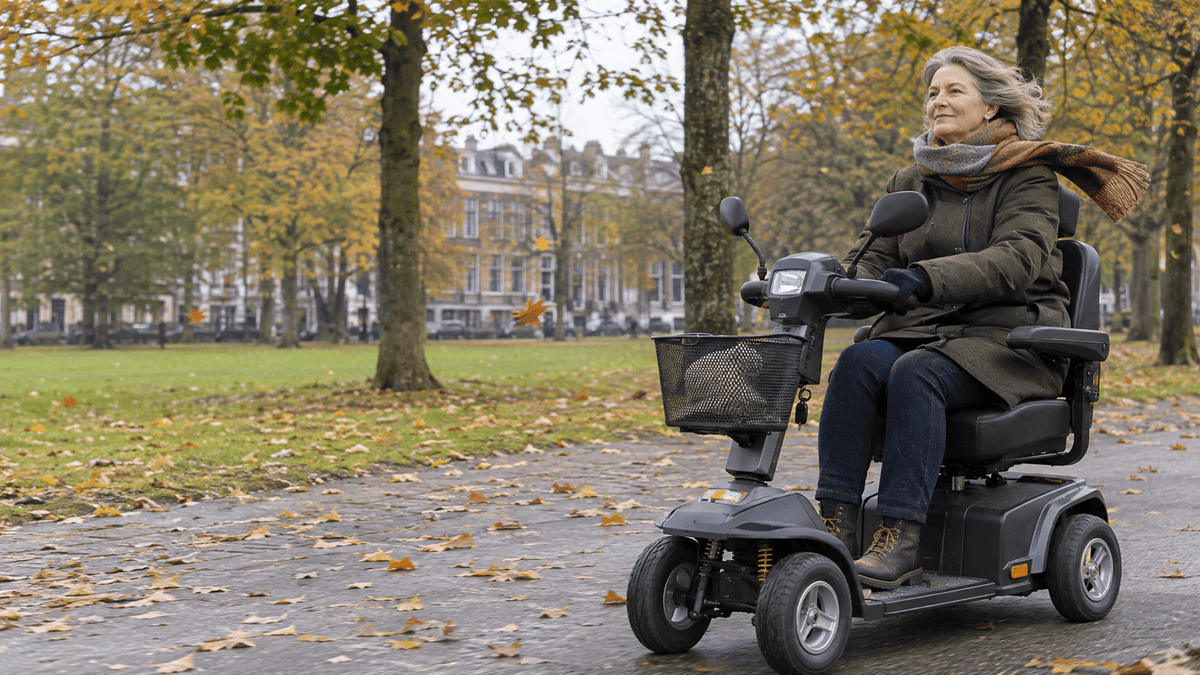
During a cold ride, your back, seat, hands, legs, and feet can quickly feel cold. This can make it harder to stay comfortably outdoors or be out for longer.
Wind, moisture, the outdoor temperature, your clothing, and the time you spend outdoors all play a role. Because not everyone experiences cold in the same way, there is no single solution that works for everyone.
With these seven practical tips, you can determine what you need to stay comfortably warm in a wheelchair or on a mobility scooter.
1. Check not only the temperature, but also the wind
The outdoor temperature does not tell the whole story. Wind carries heat away from exposed skin more quickly, making it feel colder than the thermometer indicates.
On a mobility scooter, you will also experience extra airflow while driving. Therefore, protect not only your upper body, but also pay attention to your hands, legs, and feet.
Before leaving, check:
-
The expected temperature.
-
The wind speed and wind direction.
-
The chance of rain or wet snow.
-
How long you expect to be outdoors.
-
Whether you can go indoors somewhere along the way.
Is it cold and windy? Then choose an outer layer that protects you from the wind.

2. Work with multiple layers of clothing
Different layers of clothing trap air between them. This air helps to better retain body heat. Moreover, you can more easily add or remove a layer while on the go.
A practical setup consists of:
-
A comfortable base layer that does not retain moisture for long.
-
An insulating middle layer, for example made of fleece or wool.
-
An outer layer that protects against wind and precipitation.
Make sure the clothing is not unnecessarily tight. Clothing that is too tight can be uncomfortable and limits the space for insulating air layers.
Also stay as dry as possible. Wet clothing cools the body down more quickly. Multiple loose layers of clothing and a wind- and water-resistant outer layer are therefore also recommended by official cold weather guidelines.

3. Protect your legs with a suitable blanket
A regular household blanket can shift during a ride, offer insufficient protection, or come too close to the wheels. Therefore, preferably use a blanket designed for use in a wheelchair or on a mobility scooter.
Depending on your needs, you can choose from:
-
An open blanket that you can easily lay over your legs.
-
A flexible model that shapes itself around the lower body.
-
A blanket with a footmuff for extra protection around the feet.
-
A closed model for more coverage.
-
A waterproof version for changeable weather.
Always check that the blanket lies securely and comfortably and cannot come into contact with the wheels, controls, or other moving parts.

4. Pay extra attention to hands and feet
During a cold ride, hands and feet are directly exposed to the outdoors or are further away from the warm torso. Therefore, pay separate attention to these body parts.
Think about:
-
Dry, warm socks.
-
Fitting and insulating footwear.
-
Gloves or mittens that do not hinder operation.
-
A footmuff that encloses the feet and legs.
-
Hand mufflers in which you can warm your hands when you are not using them.
Make sure shoes, socks, and footmuffs are not too tight and do not cause uncomfortable pressure.
Do you mainly suffer from cold hands, legs, and feet? Then a heated footmuff with powerbank can be more targeted than a loose heating pad. The Belieff footmuff has separate heating zones for the hands, legs, and feet.

5. Insulate your back and seat as well
When staying warm, a jacket or blanket is often the first thing people think of. However, the seat and back can also feel cold when you sit for longer periods.
A suitable seat or back cushion can form an extra layer between the body and the chair. However, do not change the support or sitting position without reason when you use a specific cushion for comfort, posture, or pressure distribution.
Do you want additional warmth for your back or seat? Then choose a product that fits the existing chair and support. Do not place extra materials in a way that causes pressure points, instability, or an uncomfortable sitting position.
The wireless heating pad for back and seat is intended to heat both zones at the same time. The powerbank must be ordered separately for this model.

6. Use active heat in the right place
A blanket mainly retains existing body heat. An electric heating pad or heating element actively adds heat. This can be pleasant when clothing and a blanket alone do not offer sufficient comfort.
Choose active heat based on where you experience cold:
-
Back, seat, or legs: a loose and movable heating pad.
-
Back and seat at the same time: a combined heated cushion.
-
Seat only: a flat heating mat.
-
Hands, legs, and feet: a heated footmuff.
-
Varying places in a blanket: an attachable heating element.
The Belieff Heating Pad can be used for the back, seat, or legs and comes with a 10,000 mAh powerbank. At the lowest setting, the product can provide heat for up to seven hours according to the product specifications. The actual operating time depends on other factors, including the chosen setting and conditions.
Always use electric heating products according to the product instructions. Before leaving, check that the battery is sufficiently charged, cables are safely stowed away, and the product is comfortably positioned.
Would you like to see the differences between the models first? Then also read the complete guide to choosing electric heating solutions.

7. Plan heat and breaks before departure
Do not wait until you are already very cold. Prepare for the ride in advance and think about where you can warm up if necessary.
A quick check before leaving:
-
Is your clothing dry and suitable for the weather?
-
Are your hands, legs, and feet sufficiently protected?
-
Is a powerbank or battery fully charged?
-
Is the blanket securely attached?
-
Is your phone charged?
-
Do you know where you can go indoors along the way?
-
Do you have an extra layer of clothing with you?
For longer rides, a planned break at a warm location can help. Adjust your plans when the weather becomes colder, wetter, or windier than expected.
Persistent or uncontrolled shivering is a signal to leave the cold and find a warm place. Do not ignore numbness, confusion, or noticeable weakness.
Which solution is right for where you experience cold?
Do not start with the product, but with your own needs:
|
Where do you experience cold? |
Possible solution |
|
Hands |
Gloves, hand mufflers, or a heated footmuff with hand zones |
|
Back |
Extra layer of clothing or movable heating pad |
|
Seat |
Suitable seat product or flat heating mat |
|
Back and seat |
Combined wireless heating pad |
|
Legs |
Suitable wheelchair or mobility scooter blanket |
|
Hands, legs, and feet |
Heated footmuff |
|
Varying places |
Loose heating pad or attachable heating element |
Do you suffer from cold in multiple places? Then first combine wind protection and insulation. Then only add active heat to the places where you really need it.
More comfortable on the go during cold days
Staying warm in a wheelchair or on a mobility scooter starts with good preparation. Check the weather, work with layers of clothing, and protect your legs, hands, and feet from wind and moisture.
A suitable blanket helps retain body heat. Do you need additional, targeted warmth? Then a wireless heating pad, a heating mat, or a heated footmuff can be a practical addition.
View all heating solutions from Belieff and choose what suits your body and needs.
Frequently asked questions
How do I stay warm in a wheelchair during winter?
Wear multiple dry layers of clothing, protect yourself from the wind, and especially cover your legs, hands, and feet. Use a suitable wheelchair blanket and add targeted electric heat if necessary.
Which blanket is suitable for a mobility scooter?
Choose a blanket that stays in place and does not interfere with controls, lighting, or moving parts. Depending on your preference, you can choose an open blanket, a waterproof version, or a model with a footmuff.
What helps with cold feet on a mobility scooter?
Start with dry socks, fitting footwear, and protection from the wind. For additional warmth, you can choose an insulated or heated footmuff.
Is an electric heating pad suitable for a wheelchair?
That depends on the model, placement, and your existing seat support. The product must lie comfortably and stably and must not cause unsafe pressure points or loose cables.
Which is better: a wheelchair blanket or a heated footmuff?
A wheelchair blanket helps retain body heat and protects a larger area from the cold. A heated footmuff adds active heat around the hands, legs, and feet. The best choice depends on where you experience cold and how long you are outdoors.


