




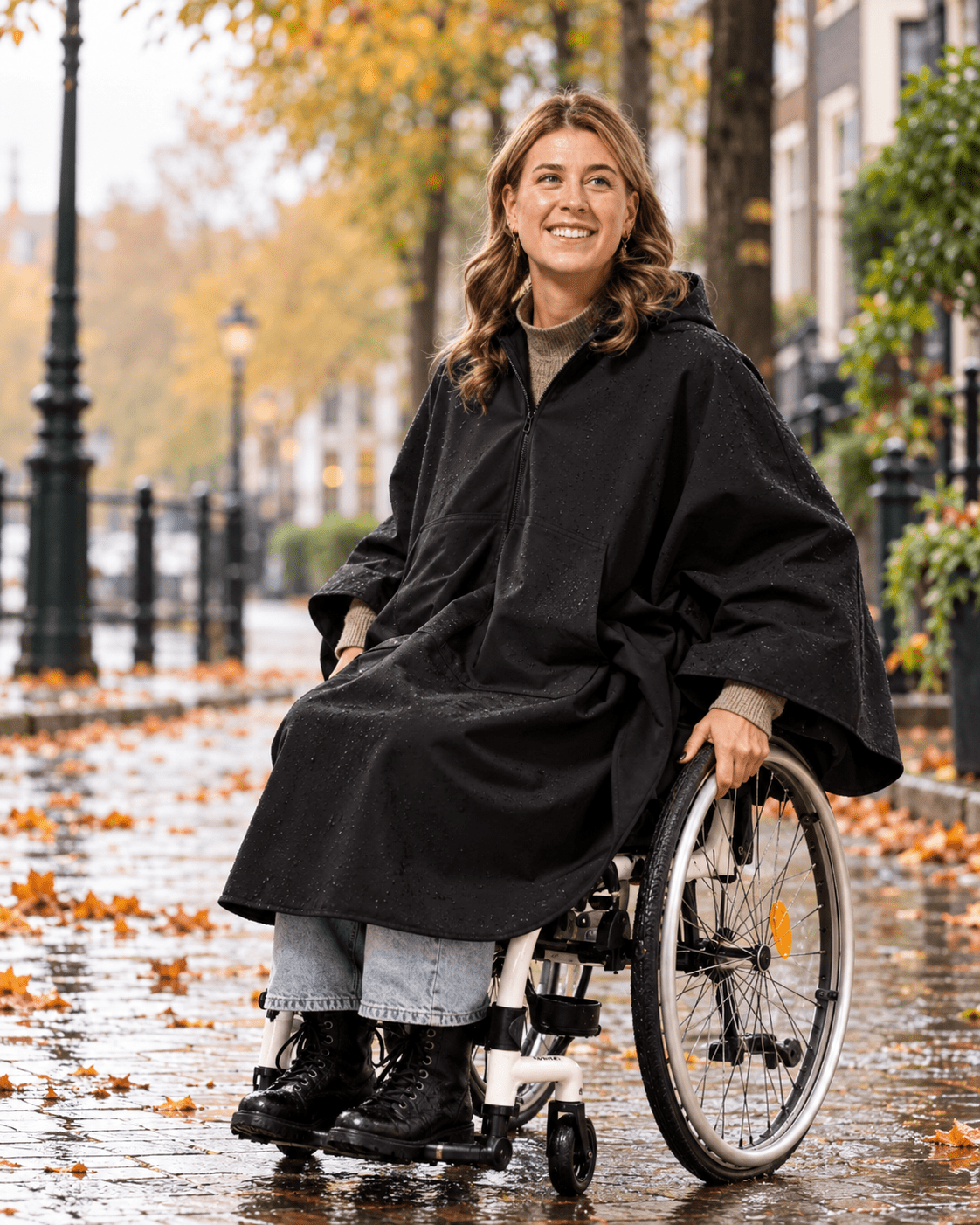
Rain, wind, lower temperatures, and early sunsets can cause extra discomfort when you're out and about. With this practical autumn checklist, you can ensure that you and your wheelchair or mobility scooter are well-prepared for the new season.
You don't have to wait for the first truly cold day to do this. By considering protection, warmth, visibility, and power supply now, you can prevent autumn weather from unexpectedly dictating your plans.

The autumn checklist in short
Before cold and wet days, check:
-
Protection against rain and wind
-
Warmth around feet and legs
-
Targeted warmth while sitting
-
Visibility during dark days
-
Dry storage space
-
Batteries and power banks
-
Route, weather, and accessibility
Below, we explain each point.
1. Ensure protection against rain and wind
A regular jacket protects the upper body but can sometimes leave legs or feet exposed while sitting. A loose blanket can shift or get wet and isn't always easy to reposition properly.
When looking for protection for a wheelchair or mobility scooter, consider:
-
Sufficient coverage of the upper body, legs, and feet
-
Freedom of movement around the arms and hands
-
A closure that is easy to use while seated
-
Material that protects against wind and light to moderate rain
-
A fit that cannot get caught in wheels or other moving parts
The Belieff Wheelchair Poncho is specially designed for wheelchair users. The extra-long design covers the body, legs, and feet. The poncho features sleeves for freedom of movement, a front zipper, and a water-repellent exterior.
When using it on a mobility scooter, always check whether the dimensions, fit, and attachment are suitable for the specific model.
VIEW THE BELIEFF WHEELCHAIR PONCHO →

2. Keep feet and legs comfortably warm
Sitting still for longer periods means producing less heat through movement. Consequently, feet and legs can quickly feel cold during an autumn ride.
Start with dry socks, appropriate footwear, and layered clothing. For longer rides or colder days, targeted warmth around the feet can provide extra comfort.
The heated footmuff from Belieff combines a soft fleece lining with built-in heating elements. The included power bank has a capacity of 20,000 mAh, allowing the footmuff to be used without a wall outlet.
The footmuff can provide up to seven hours of warmth. The actual duration may vary depending on, among other things, the selected heat setting, ambient temperature, and the condition of the power bank.
What you should check before you leave
-
Is the power bank fully charged?
-
Is the footmuff attached securely and comfortably?
-
Can feet and legs be positioned freely and without pressure points?
-
Does the material not come into contact with moving parts?
-
Are cables safely tucked away?
3. Use targeted warmth where needed
Not everyone experiences cold in the same places. One person might get cold feet, while another needs extra warmth for their back, neck, or shoulders.
The Belieff Heating Pad is a flat heating mat designed for targeted warmth. The product comes with a 10,000 mAh power bank, allowing it to be used at home and on the go without a fixed power source.
For extra warmth while sitting, there is also the wirelessly heated seat cushion.
Choose a product based on where you need warmth and always check the product instructions before use.

4. Make yourself more visible
In autumn, days get shorter and it gets dark earlier. Rain, fog, and low sun can further reduce visibility for other road users.
Therefore, check:
-
Front and rear lighting
-
Reflectors on your wheelchair or mobility scooter
-
Reflective details on clothing or bags
-
The condition of lights and batteries
-
Whether loose clothing or blankets are covering the lights
For longer rides, consider carrying a small spare light. Good visibility is important not only in the dark but also during bad weather in the daytime.
5. Keep personal belongings dry
You want your phone, medication, documents, gloves, or charger to remain dry and accessible on the road.
Preferably use a bag that can be securely attached and does not come into contact with wheels or other moving parts. You can also store fragile items in a water-resistant inner compartment or a sealable cover.
Before you leave, check if you can easily reach important items without having to remove your protective gear completely.
6. Charge batteries and power banks beforehand
Colder conditions can affect how long batteries last. Therefore, do not leave without checking the charge status of your mobility scooter, electric wheelchair, phone, and any heating products.
Make it a fixed routine:
-
Charge the main battery in good time
-
Check the power bank for heating products
-
Bring the right cables
-
Keep electronics dry
-
Plan longer routes with a sufficient margin
Use only suitable chargers and always follow the manufacturer's instructions.
7. Check weather, route, and accessibility
An accessible route can temporarily become more difficult to navigate in autumn due to leaves, puddles, mud, or road works.
Therefore, check in advance:
-
The weather forecast
-
Possible rain and wind
-
The surface of the route
-
Accessible entrances and covered resting places
-
The distance and expected battery life
-
An alternative route or return option
For longer or unfamiliar routes, consider letting someone know where you are going and when you expect to return.
Well-prepared for colder days
Good autumn preparation isn't about bringing as many things as possible; it’s about checking beforehand what you need to be on the road with comfort and confidence.
For one person, protection against rain is most important; for another, warm feet or extra warmth while sitting is the top priority.
The Belieff heated footmuff provides targeted warmth around the feet and can be used on the road thanks to the included power bank.
Looking for a different solution for cold or wet days?
DISCOVER ALL WARMTH AND COMFORT SOLUTIONS →
Frequently asked questions
How do you stay warm in a wheelchair during autumn?
Use dry clothing in multiple layers and protect the legs and feet in particular. For targeted warmth, you can use a heated footmuff, heating pad, or heated seat cushion. Always check that a product fits well and can be attached safely.
What helps against cold feet in a wheelchair?
Dry socks, appropriate footwear, and protection against wind form the basis. A heated footmuff can provide additional warmth around the feet when sitting for longer periods.
What should a good wheelchair poncho offer?
Look for sufficient length, protection of the legs and feet, freedom of movement, easy opening and closing, and material that suits the expected weather. The material must not get caught between wheels or other moving parts.
Can I also use a wheelchair poncho on a mobility scooter?
That depends on the dimensions, fit, and design of the poncho and the mobility scooter. Always check whether the product can be used safely and does not interfere with controls, lighting, or moving parts.
How long does a heated footmuff stay warm?
According to the product specifications, the Belieff heated footmuff can provide up to seven hours of warmth. The exact duration depends on the heat setting, ambient temperature, and the condition of the power bank.
What items should you take on an autumn ride?
Think of rain gear, a charged phone, dry gloves, important medication, a power bank, lighting, and a bag in which personal items remain dry.


